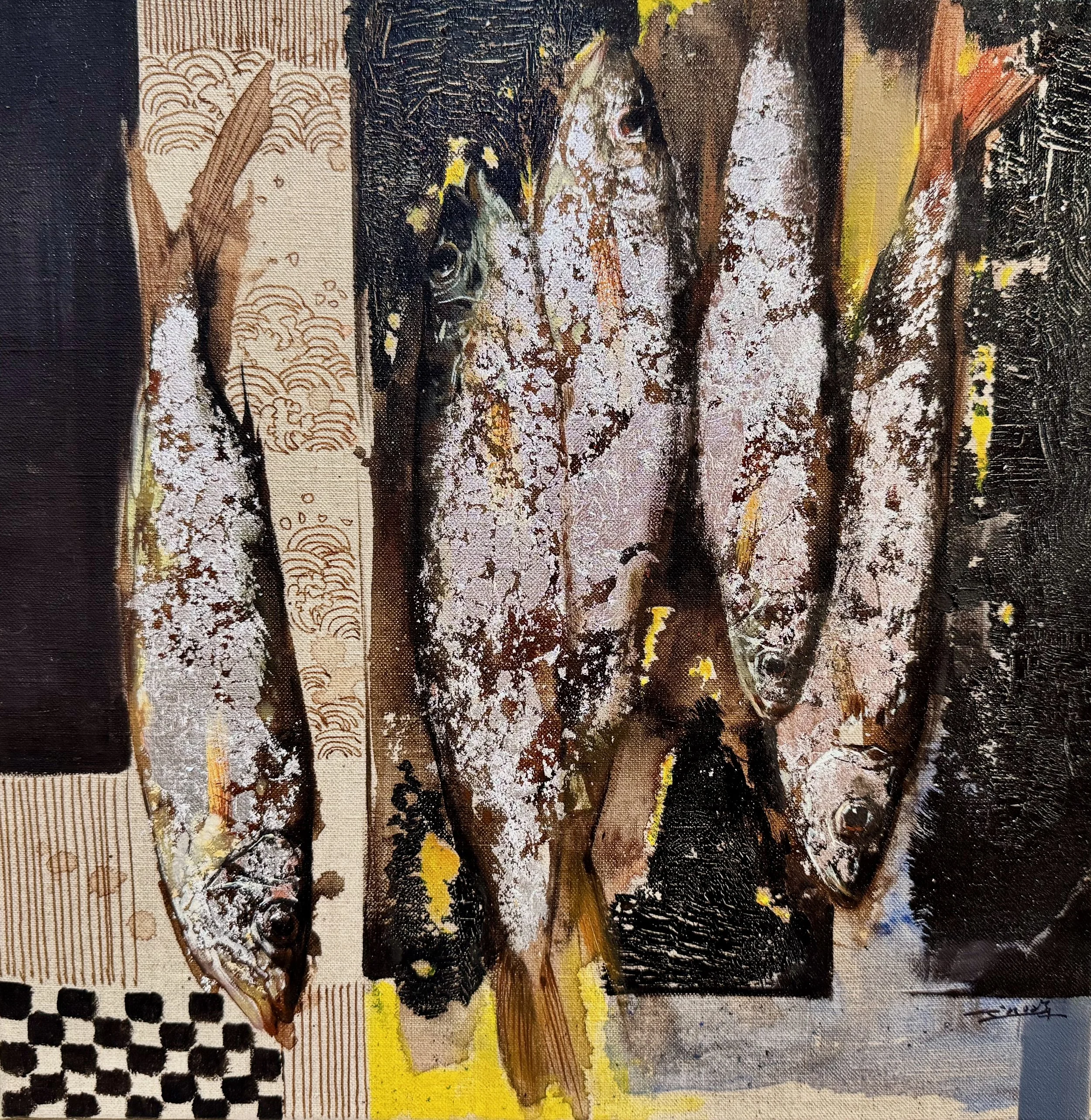
Yanqun WU
Yanqun WU (吴衍群) is a contemporary Chinese oil painter known for his lyrical, poetic interpretations of landscapes, nature, and everyday scenes. Born in 1982 in Jieyang, Guangdong Province, he displayed an early passion for art and began formal training as a child. In 1998, he enrolled at Jieyang Art School, where he studied under the renowned oil painter Tian Xiaoping. This mentorship shaped his technical foundation and encouraged him to blend Western oil techniques with the emotional resonance and compositional harmony of traditional Chinese painting.
Yanqun’s style is characterized by romantic, serene, and introspective moods. His paintings celebrate everyday beauty and cultural memory, offering viewers moments of peaceful reflection amid modern life. His canvases often feature soft lighting, vibrant yet harmonious colors, and a sense of quiet elegance that evokes classical Chinese ink landscapes. Recurring themes include the “Morning Glow” (映朝霞) and “Memories of Jiangnan” (忆江南) series, rural idylls, lotus ponds, cranes, and sunlit streets. He employs exaggerated, luminous palettes and subtle emotional depth to convey personal feelings of tranquility, renewal, and cultural nostalgia. His works feel fresh and delicate, bridging Eastern spiritual essence with Western realism. Many pieces have been privately collected, reflecting their broad appeal among collectors who appreciate their calming, contemplative quality.
Yanqun is a member of the China Artists Association. His career gained momentum through consistent participation in national and provincial exhibitions. In 2013, his self-portrait was featured in a major contemporary art exhibition at the Shanghai Museum of Contemporary Art. From 2020 onward, Yanqun achieved wider recognition. His 2020 painting Warm Sunshine (暖阳) was selected for the Guangdong Oil Painting Exhibition. In 2021, works such as Old City, New Dream (旧城新梦) entered the Second National Oil Painting Biennial, while others appeared in national scenic and still-life shows. Subsequent years brought further honors: Silver Scales(银鳞) in the Fourth National Powder Painting Exhibition (2022), multiple “Jiangnan Memories” pieces earning awards at Guangdong small-oil and watercolor shows, and selections into the Eighth Guangdong Contemporary Oil Painting Art Exhibition (2023). In 2024, entries like Wandering Dreams (游园戏梦) appeared in national youth artist exhibitions and the “Lingnan Impression” New Era Art Creation Show, where he received an Excellence Award. Through these accomplishments, Wu Yanqun has emerged as a respected voice in China’s contemporary art scene.
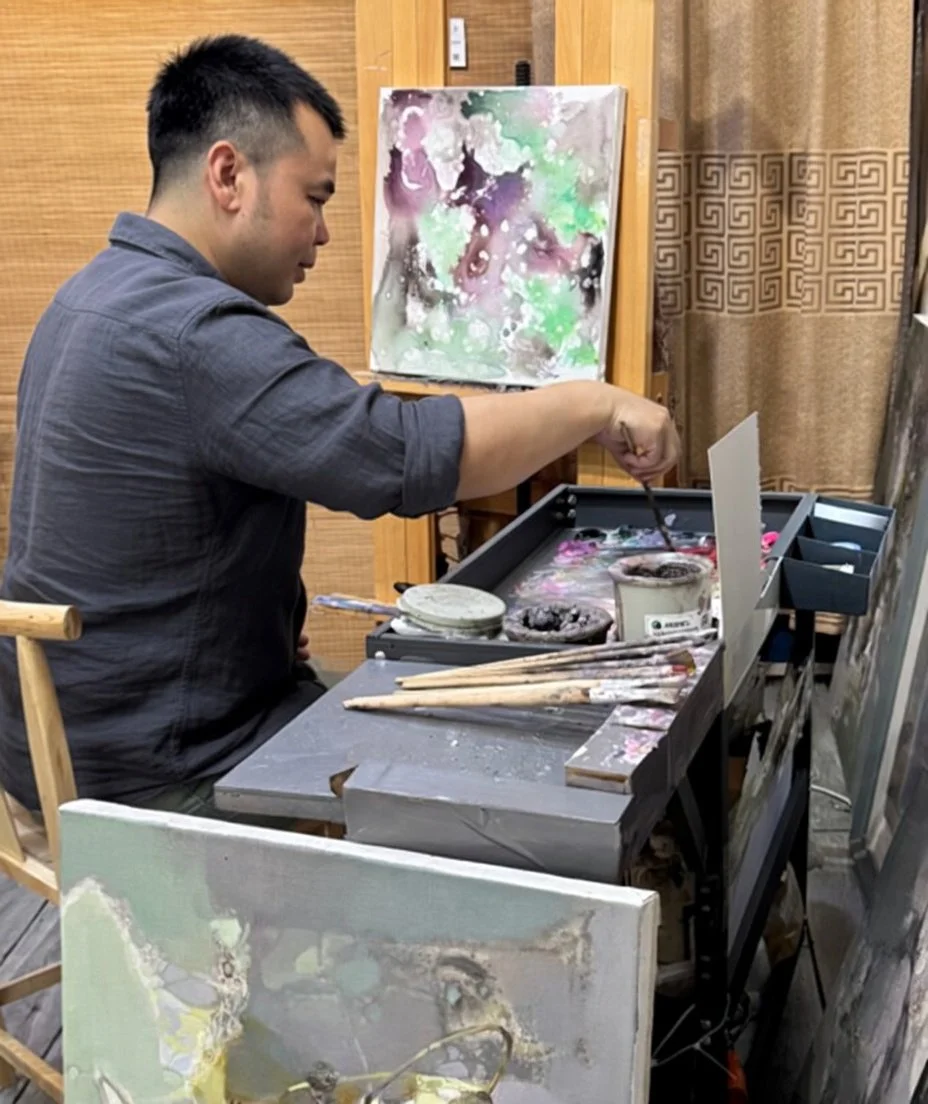

Wenhu ZHOU
Wenhu ZHOU (周文虎)
(born March 1938, Yongchun, Fujian Province, China)
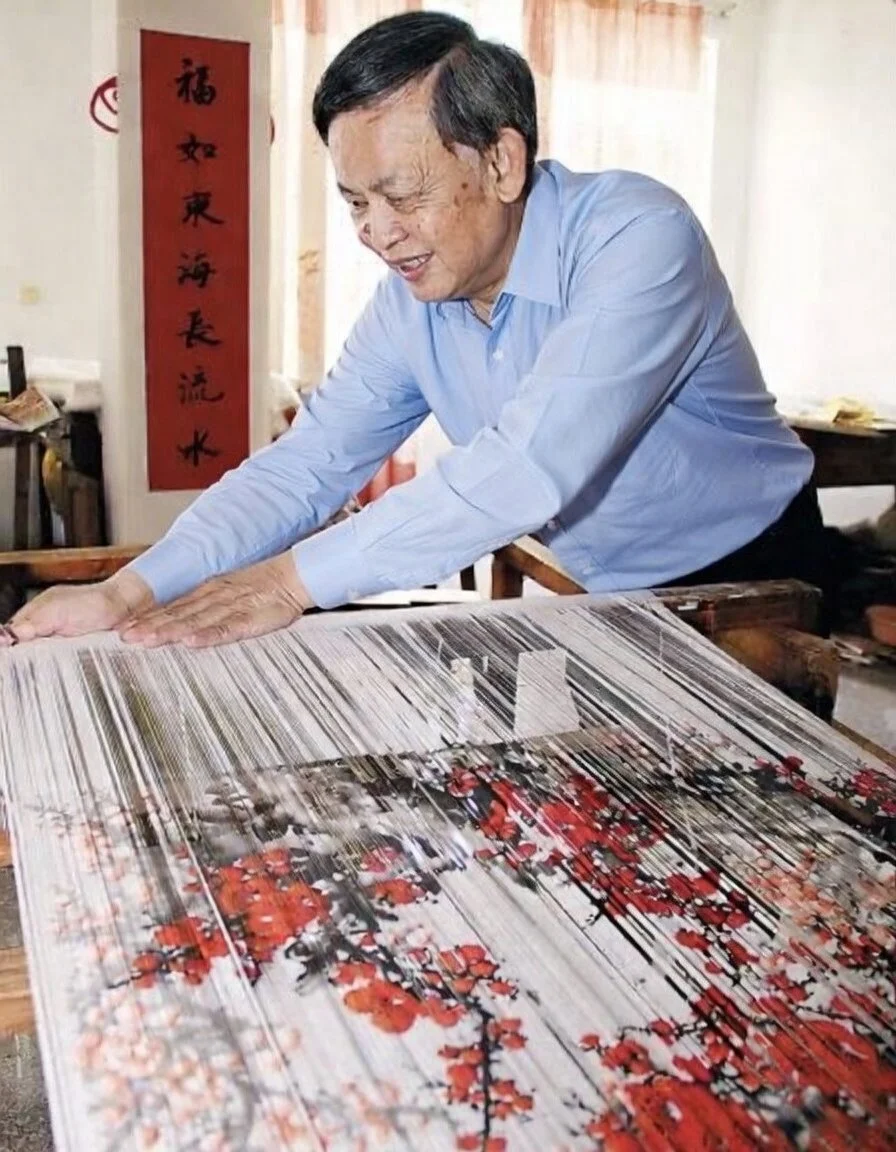
Wenhu Zhou stands as the preeminent master and sole national-level representative inheritor of Yongchun paper-weaving painting (Yongchun zhi zhi hua), a singular Chinese folk art that fuses painting and weaving into a luminous, textile-like medium. Recognized as a National Intangible Cultural Heritage of China in 2011, this rare craft—often compared to the “Four Great Weavings of China”—represents one of the most distinctive contributions of East Asian artistic tradition to the global canon of textile and pictorial arts.
Zhou is also a Fujian Provincial Master of Arts and Crafts and a National First-Class Artist. Over more than six decades, his visionary stewardship has elevated an endangered heritage from the brink of extinction to international acclaim, preserving a living bridge between ancient Sui-Tang techniques and contemporary artistic expression.
Emerging in the Sui-Tang era (approximately 1,400 years ago) in the misty mountain landscapes of Yongchun, paper-weaving painting transforms traditional Chinese ink and color painting on Xuan paper into a woven textile. The artist paints the image, precision-cuts it into fine warp strips, then interweaves them with weft strips on a specialized loom before mounting. The resulting works possess a unique ethereal quality: soft, atmospheric gradients, visible paper fibers, and a delicate three-dimensional texture that evokes the veiled mist and layered depth of classical Chinese landscape painting, yet in a tactile, almost sculptural form distinct from conventional brushwork or tapestry.
In 1990 he established China’s first private research institute for the art form, the Yongchun Yiting Paper-Weaving Painting Craft Research Institute, where he trained apprentices and, crucially, passed the lineage to his three sons—Zhou Meisen, Zhou Meijun, and Zhou Mingta—creating a multi-generational family atelier now recognized as a “paper-weaving painting household.”
Zhou’s monumental works have garnered worldwide attention and institutional recognition. His work China Classical Ten-Thousand-Li Great Wall Paper-Weaving Painting, whic is 1—-meter long, officially entered Guinness Records. His creations have received gold medals at the China Arts and Crafts Hundred Flowers Awards (2014), with additional works entering major museum collections in China and earning international exhibitions and acclaim.
Today, Wenhu Zhou’s legacy resonates far beyond China. His art embodies the universal human impulse to weave beauty from fragility—transforming humble paper into enduring cultural treasure—and stands as a compelling example of how living heritage can enrich the global dialogue between tradition and innovation in contemporary art.

Youju LIU
Liu Youju is a calligrapher, avant-garde artist, and art critic whose work bridges traditional Chinese culture with abstract, international art forms. His work often involves unique techniques, such as painting on rice paper using both ink and oils.
He has exhibited in prestigious institutions such as the British Museum in London, the Musee des arts Decoraitifs and the Centre Pompidou in Paris, the Academy of the Arts of Drawing and the Palazzo Medici Riccardi Museum in Florence. Liu Youju’s works have achieved notable results in the secondary market while gaining strong international institutional recognition.
Exhibition Timeline
2014 Solo exhibition at The Richard Nixon Presidential Library and Museum, USA. His work Christmas Impressions was acquired by the museum for its permanent collection.
2015 Solo exhibition at the Beijing Today Art Museum; Solo exhibition titled Illusionism Rational Return at the Museum of Decorative Arts in Paris, France ; Solo exhibition titled Classical and Contemporary Fusion at The British Museum
2016 Solo exhibition titled Demolition vs Construction at Palazzo Medici Riccardi Museum, Italy
2017 Solo exhibition titled Phantom Time and Space Encounters Pompidou at The Georges Pompidou National Center for Art and Culture in Paris, France
2021 Solo exhibition titled Beyond Abstraction at Hall of Academy of the Arts and Drawings, Florence, Italy
2024 Solo exhibition titled Starting from The Metapoint at Palazzo Dona delle Rose, as part of the 60th International Art Exhibition, La Biennale di Venezia, Italy
2025 Solo exhibition titled Mirror of The Soul - illusion of universal identity at Burgh House Museum, London, U.K.; Solo exhibition titled Bounded and Unbounded at National Gallery of Modern and Contemporary Art, Rome, Italy
Secondary Market Highlights
Title : Scale Wave Mirage
Year : 2015
Color Ink on paper
81 cm x 69.5 cm
Auction House & Date: Beijing Poly International Auction 2017
Realized Price :
RMB 345,000 / approx. Euro 42,993
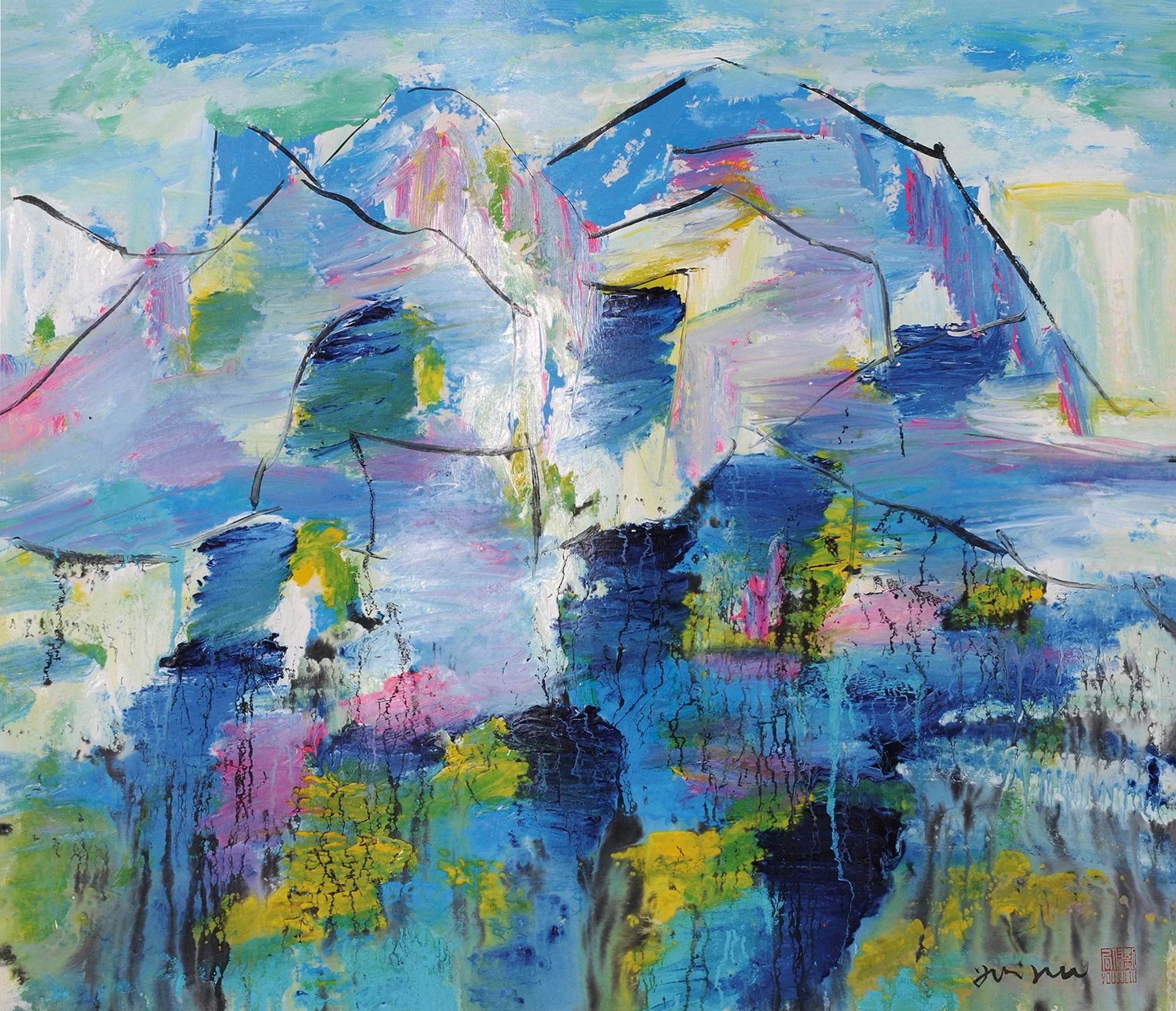

Title : Nymph in Flowers
Year : 2015
Color Ink on paper
67 cm x 67 cm
Auction House: Beijing Poly International Auction
Auction Year : 2017
Realized Price
RMB 230,000 / approx. Euro 28,661
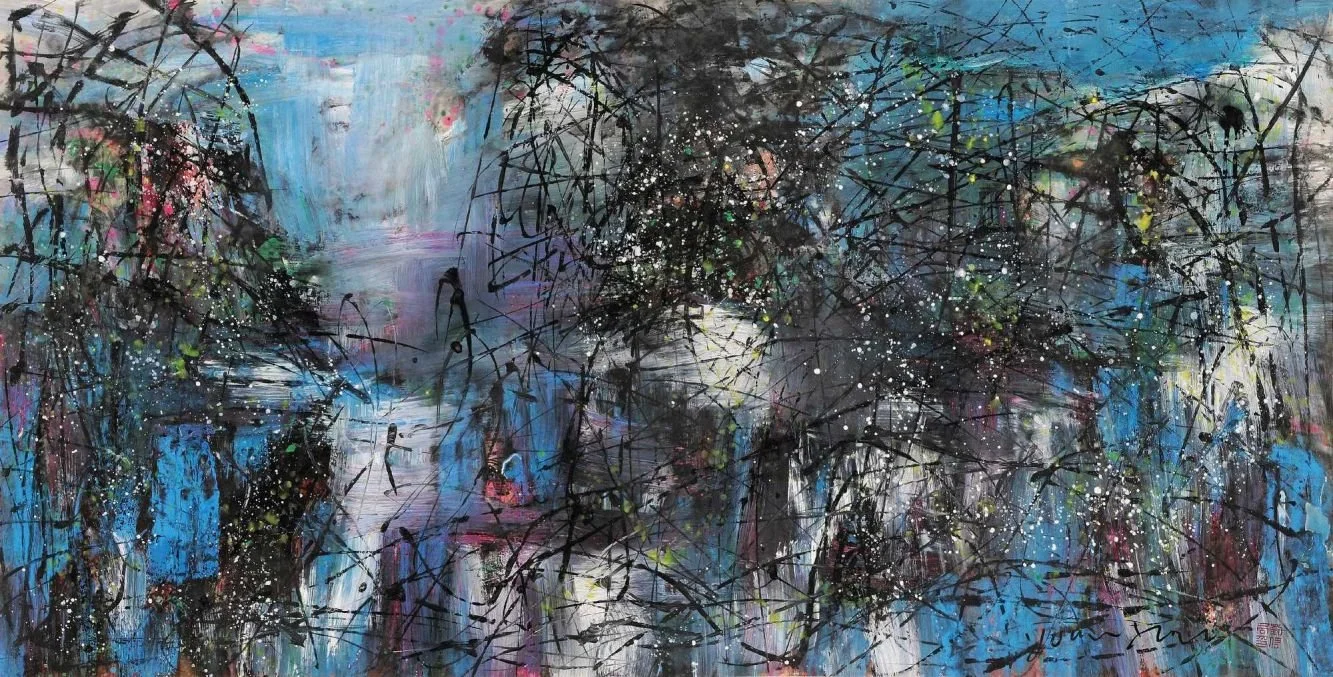
Title : Uncultivated Land
Year : 201567
Color Ink on Paper
68 cm x 136 cm
Auction House : Beijing Poly International Auction
Auction Year : 2017
Realized Price : RMB 862,500 / approx. Euro 107,482
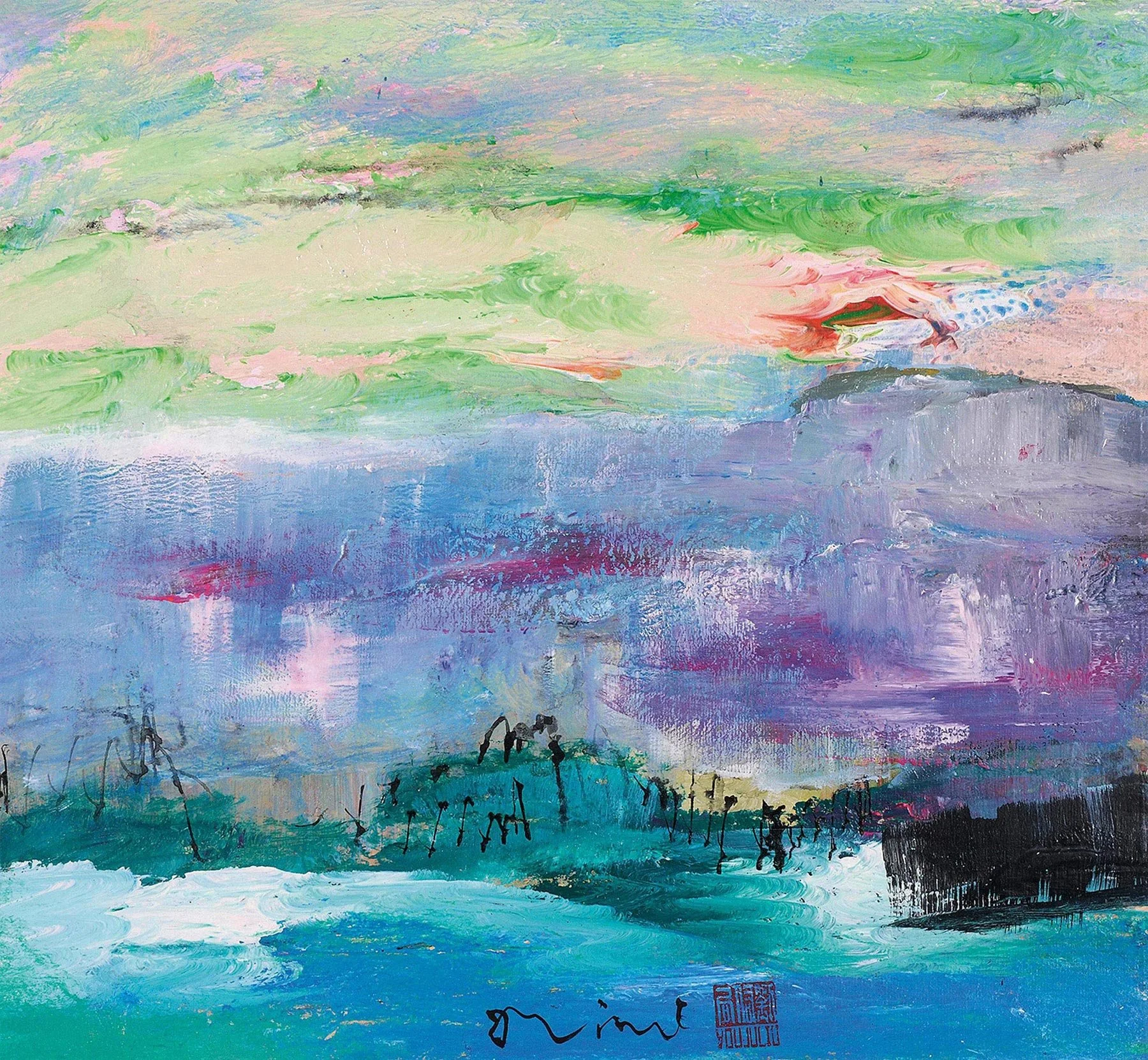
Title : Water Town
Year : 2015
Color Ink on Paper
40 cm x 43 cm
Auction House: Beijing Poly International Auction
Auction Year : 2017
Realized Price : RMB 149,500 / approx. Euro 18,630
Auction House: Mutual Art
Auction Year : 2017
Realized Price : USD 22,515 / approx. Euro 19,135
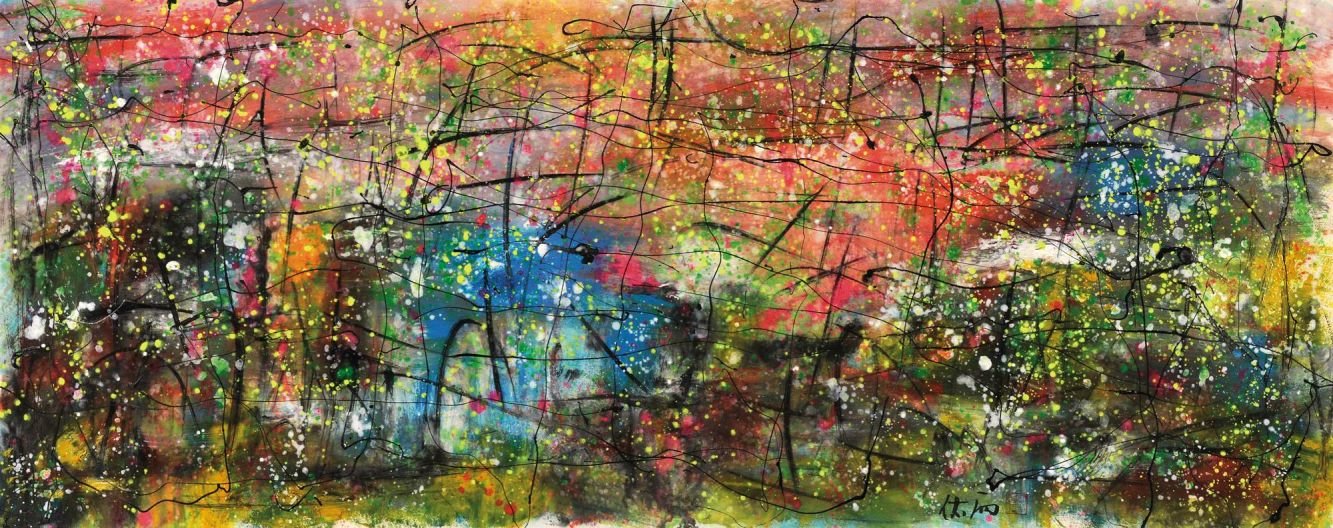
Title : The Breath of Spring
Year : 2016
Color Ink on Paper
Dimensions : 54 cm x 136 cm
Auction House & Date : Beijing Poly International Auction 2017
Realized Price : RMB 690,000 / approx. Euro 86,985